Cardinal Tetra
Cardinal Tetra
Scientific Name: Paracheirodon axelrodi
Common Names: Cardinal Tetra
Origin: South America (Brazil, Colombia, Venezuela – Rio Negro and Orinoco basins)
Adult Size: 2 inches (5 cm)
Lifespan: 3–5 years
Temperament: Peaceful, schooling
Swimming Zone: Midwater
Sales Description
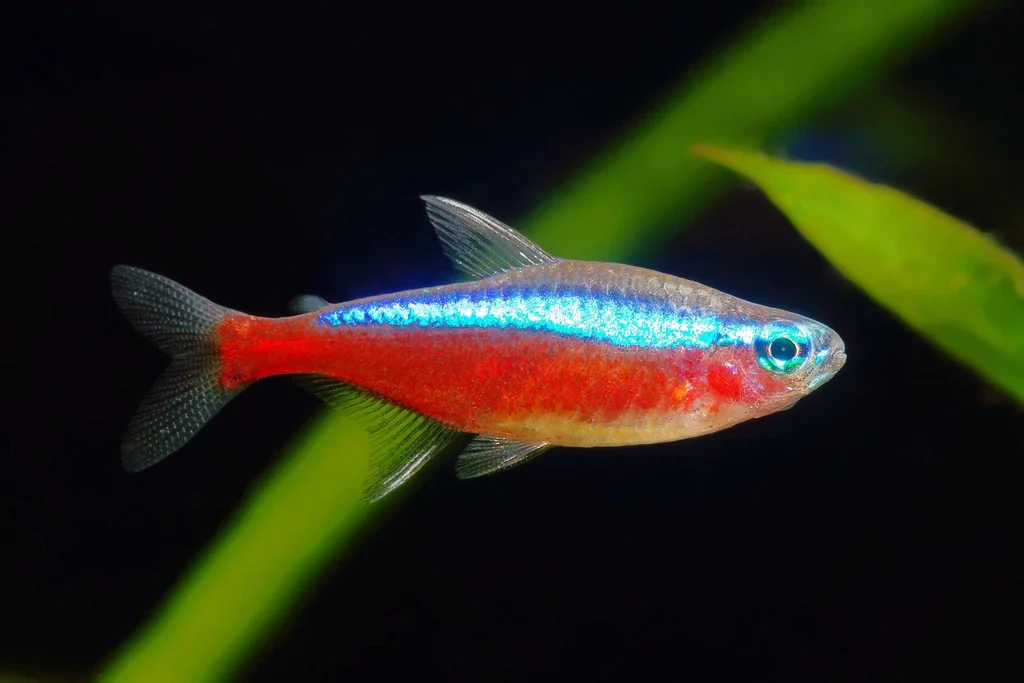
The Cardinal Tetra is one of the most iconic and beloved freshwater fish in the aquarium hobby, admired for its striking electric blue stripe and vivid crimson red body that runs the full length of the fish. Unlike its close relative, the neon tetra, the cardinal’s red coloration extends from head to tail, offering a more intense and eye-catching display.
Cardinals are peaceful, social fish that thrive in schools of six or more, making them ideal for community aquariums and planted tanks. Their vibrant coloration stands out beautifully against driftwood, live plants, and darker substrates, especially under soft, subdued lighting.
Healthy, fully acclimated stock ensures vivid coloration and active schooling behavior right from the start.
Care Guide
Tank Requirements
Minimum Tank Size: 15–20 gallons (more for larger schools)
Biotope: Heavily planted, shaded areas, dark substrate recommended
Lighting: Low to moderate; floating plants help simulate natural habitat
Filtration: Gentle to moderate flow; avoid strong currents
Cover: Floating plants or leaf litter provide shelter and security
Water Parameters
Temperature: 74–82°F (23–28°C)
pH Range: 4.5–7.0 (prefer soft, slightly acidic water)
Hardness: Very soft to moderately hard
Water Changes: 20–30% weekly to maintain pristine water quality
Feeding & Diet
Diet: Omnivore
Feeding Frequency: 1–2 times daily
Preferred Foods: Micro pellets, flake food
Frozen or live foods: daphnia, baby brine shrimp, bloodworms
Occasional treats: Repashy Community Plus, Super Green
Notes: Feed a varied diet to ensure peak coloration and health
Behavior & Tankmates
Temperament: Very peaceful, ideal for community tanks
Schooling: Best kept in groups of at least 6–10; more is better
Compatible Tankmates: Small peaceful species like rasboras, otocinclus, pygmy corydoras, dwarf cichlids (Apistogramma, Nannacara), peaceful gouramis, endlers, and pencilfish
Avoid: Larger predatory fish or fin-nipping/aggressive species
Breeding Notes
Spawning Difficulty: Moderate to difficult
Setup: Separate soft-water breeding tank with dim lighting and fine-leaved plants or spawning mops
Behavior: Egg scatterers with no parental care
Fry Care: Eggs are light-sensitive; feed infusoria or green water, then baby brine shrimp
Product Information
Product Information
Shipping & Returns
Shipping & Returns
Cardinal Tetra
Cardinal Tetra
Cardinal Tetra
Scientific Name: Paracheirodon axelrodi
Common Names: Cardinal Tetra
Origin: South America (Brazil, Colombia, Venezuela – Rio Negro and Orinoco basins)
Adult Size: 2 inches (5 cm)
Lifespan: 3–5 years
Temperament: Peaceful, schooling
Swimming Zone: Midwater
Sales Description
The Cardinal Tetra is one of the most iconic and beloved freshwater fish in the aquarium hobby, admired for its striking electric blue stripe and vivid crimson red body that runs the full length of the fish. Unlike its close relative, the neon tetra, the cardinal’s red coloration extends from head to tail, offering a more intense and eye-catching display.
Cardinals are peaceful, social fish that thrive in schools of six or more, making them ideal for community aquariums and planted tanks. Their vibrant coloration stands out beautifully against driftwood, live plants, and darker substrates, especially under soft, subdued lighting.
Healthy, fully acclimated stock ensures vivid coloration and active schooling behavior right from the start.
Care Guide
Tank Requirements
Minimum Tank Size: 15–20 gallons (more for larger schools)
Biotope: Heavily planted, shaded areas, dark substrate recommended
Lighting: Low to moderate; floating plants help simulate natural habitat
Filtration: Gentle to moderate flow; avoid strong currents
Cover: Floating plants or leaf litter provide shelter and security
Water Parameters
Temperature: 74–82°F (23–28°C)
pH Range: 4.5–7.0 (prefer soft, slightly acidic water)
Hardness: Very soft to moderately hard
Water Changes: 20–30% weekly to maintain pristine water quality
Feeding & Diet
Diet: Omnivore
Feeding Frequency: 1–2 times daily
Preferred Foods: Micro pellets, flake food
Frozen or live foods: daphnia, baby brine shrimp, bloodworms
Occasional treats: Repashy Community Plus, Super Green
Notes: Feed a varied diet to ensure peak coloration and health
Behavior & Tankmates
Temperament: Very peaceful, ideal for community tanks
Schooling: Best kept in groups of at least 6–10; more is better
Compatible Tankmates: Small peaceful species like rasboras, otocinclus, pygmy corydoras, dwarf cichlids (Apistogramma, Nannacara), peaceful gouramis, endlers, and pencilfish
Avoid: Larger predatory fish or fin-nipping/aggressive species
Breeding Notes
Spawning Difficulty: Moderate to difficult
Setup: Separate soft-water breeding tank with dim lighting and fine-leaved plants or spawning mops
Behavior: Egg scatterers with no parental care
Fry Care: Eggs are light-sensitive; feed infusoria or green water, then baby brine shrimp
Product Information
Product Information
Shipping & Returns
Shipping & Returns
Description
Cardinal Tetra
Scientific Name: Paracheirodon axelrodi
Common Names: Cardinal Tetra
Origin: South America (Brazil, Colombia, Venezuela – Rio Negro and Orinoco basins)
Adult Size: 2 inches (5 cm)
Lifespan: 3–5 years
Temperament: Peaceful, schooling
Swimming Zone: Midwater
Sales Description
The Cardinal Tetra is one of the most iconic and beloved freshwater fish in the aquarium hobby, admired for its striking electric blue stripe and vivid crimson red body that runs the full length of the fish. Unlike its close relative, the neon tetra, the cardinal’s red coloration extends from head to tail, offering a more intense and eye-catching display.
Cardinals are peaceful, social fish that thrive in schools of six or more, making them ideal for community aquariums and planted tanks. Their vibrant coloration stands out beautifully against driftwood, live plants, and darker substrates, especially under soft, subdued lighting.
Healthy, fully acclimated stock ensures vivid coloration and active schooling behavior right from the start.
Care Guide
Tank Requirements
Minimum Tank Size: 15–20 gallons (more for larger schools)
Biotope: Heavily planted, shaded areas, dark substrate recommended
Lighting: Low to moderate; floating plants help simulate natural habitat
Filtration: Gentle to moderate flow; avoid strong currents
Cover: Floating plants or leaf litter provide shelter and security
Water Parameters
Temperature: 74–82°F (23–28°C)
pH Range: 4.5–7.0 (prefer soft, slightly acidic water)
Hardness: Very soft to moderately hard
Water Changes: 20–30% weekly to maintain pristine water quality
Feeding & Diet
Diet: Omnivore
Feeding Frequency: 1–2 times daily
Preferred Foods: Micro pellets, flake food
Frozen or live foods: daphnia, baby brine shrimp, bloodworms
Occasional treats: Repashy Community Plus, Super Green
Notes: Feed a varied diet to ensure peak coloration and health
Behavior & Tankmates
Temperament: Very peaceful, ideal for community tanks
Schooling: Best kept in groups of at least 6–10; more is better
Compatible Tankmates: Small peaceful species like rasboras, otocinclus, pygmy corydoras, dwarf cichlids (Apistogramma, Nannacara), peaceful gouramis, endlers, and pencilfish
Avoid: Larger predatory fish or fin-nipping/aggressive species
Breeding Notes
Spawning Difficulty: Moderate to difficult
Setup: Separate soft-water breeding tank with dim lighting and fine-leaved plants or spawning mops
Behavior: Egg scatterers with no parental care
Fry Care: Eggs are light-sensitive; feed infusoria or green water, then baby brine shrimp