Croaking Gourami
Croaking Gourami
Scientific Name: Trichopsis vittata
Common Names: Croaking Gourami, Talking Gourami, Striped Gourami
Origin: Southeast Asia – Thailand, Cambodia, Vietnam, Malaysia, Indonesia
Adult Size: 2 to 2.5 inches (5–6.5 cm)
Lifespan: 4 to 6 years
Temperament: Peaceful, shy, interactive
Swimming Zone: Mid to top level
Description
The Croaking Gourami (Trichopsis vittata) is a small, peaceful labyrinth fish known not only for its elegant appearance but also for its ability to "croak" or produce audible clicking sounds—especially during social or breeding interactions. These subtle vocalizations give the species its name and make them uniquely interactive additions to a quiet, well-planted aquarium.
Displaying soft bronze tones with horizontal iridescent stripes, Croaking Gouramis are ideal for nano tanks and community aquariums where calm tankmates and gentle flow are maintained. Their shy nature makes them most comfortable in well-structured aquascapes with floating plants and shaded areas.
This species is perfect for aquarists seeking natural behaviors, personality, and charm in a compact, peaceful fish.
Care Guide
Aquarium Setup
-
Minimum Tank Size: 10 gallons (larger preferred for groups or community setups)
-
Aquascape: Heavily planted with soft-leaved plants, floating plants, and shaded areas
-
Décor: Driftwood, leaf litter, and fine branches enhance comfort and mimic natural habitats
-
Filtration: Gentle sponge or low-flow filter; avoid strong currents
-
Lighting: Low to moderate preferred—dappled light is ideal
Water Parameters
-
Temperature: 75–82°F (24–28°C)
-
pH: 6.0–7.5
-
Hardness: Soft to moderately hard (3–12 dGH)
-
Water Changes: 25–30% weekly; maintain excellent water quality without drastic changes
Diet & Feeding
-
Feeding Frequency: 1–2 times daily
-
Diet Type: Omnivorous; prefers live and frozen foods but accepts high-quality prepared options
-
Suggested Foods:
-
Live or frozen: baby brine shrimp, daphnia, bloodworms, microworms
-
High-quality micro pellets and flake foods
-
Occasional vegetable matter or spirulina-based foods
-
Social Behavior & Compatibility
-
Temperament: Peaceful, shy; may be territorial during breeding
-
Best Kept: In pairs or small groups (1 male to 2+ females); males may display during social interaction
-
Croaking Sounds: Males produce audible clicking/croaking noises during courtship or mild disputes
-
Tankmates:
-
Peaceful nano fish: rasboras, small tetras, pygmy corydoras, kuhli loaches
-
Avoid fin-nippers or overly active species
-
Shrimp-safe with adult Neocaridina and Caridina species in planted setups
-
Special Notes on Behavior
-
Labyrinth Organ: Like bettas and other gouramis, Croaking Gouramis can breathe atmospheric air—ensure access to the water’s surface
-
Shyness: These fish are more confident with cover and in established, low-stress environments
-
Courtship: Males display fin flaring and croaking behaviors during mating rituals or mild dominance interactions
Maintenance Tips
-
Keep water calm and well-oxygenated
-
Floating plants and surface cover help reduce stress and encourage natural behavior
-
Avoid sudden environmental changes or loud vibrations—Croaking Gouramis are sensitive to stress
Available Now at Planted Aquaria
Soft-spoken and full of personality, the Croaking Gourami brings charm and natural interaction to any peaceful aquarium. A true conversation starter—literally—this species is ideal for planted nano tanks and Southeast Asian biotopes.
Limited stock available. Visit www.plantedaquaria.ca to order or check availability.
Product Information
Product Information
Shipping & Returns
Shipping & Returns
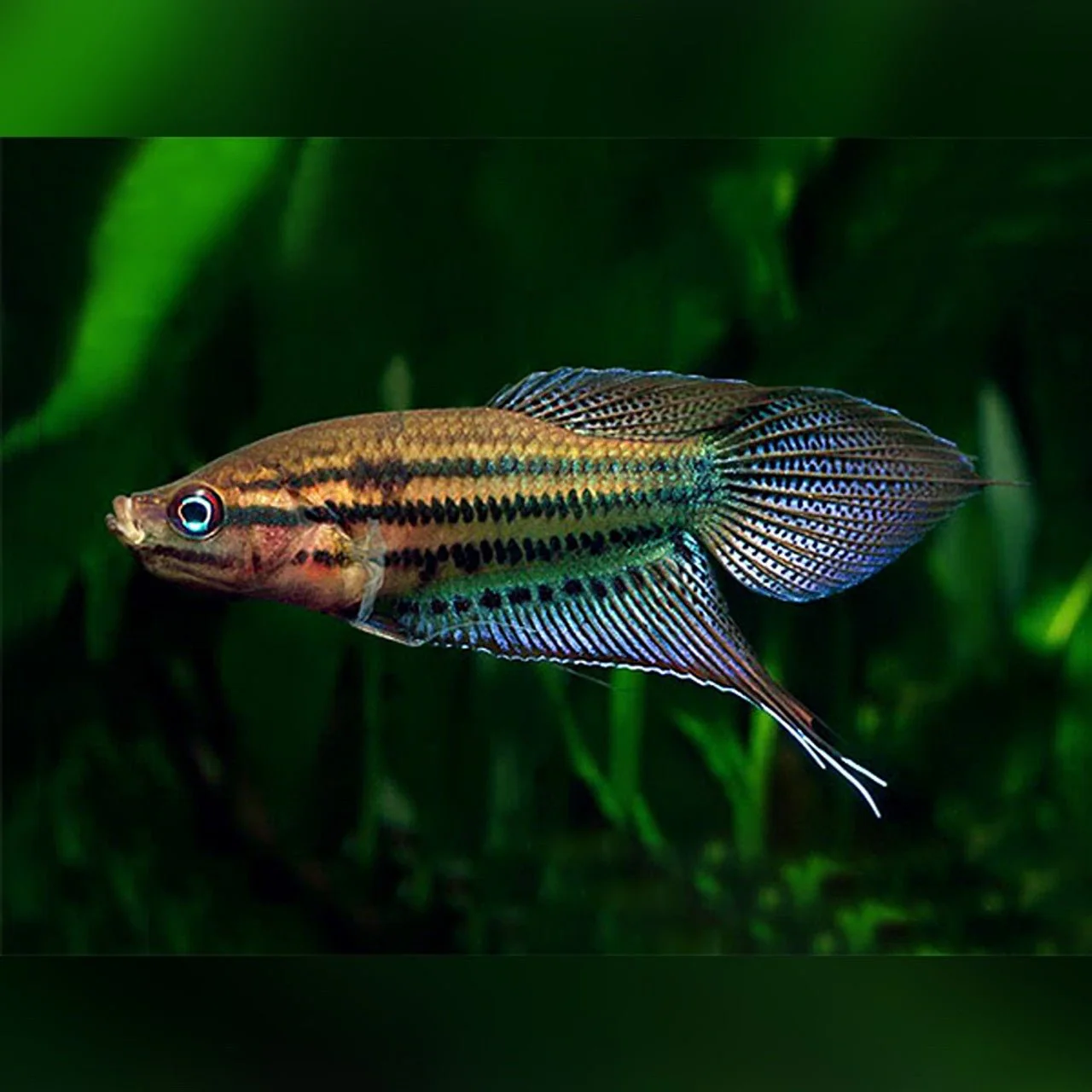
Croaking Gourami
Croaking Gourami
Croaking Gourami
Scientific Name: Trichopsis vittata
Common Names: Croaking Gourami, Talking Gourami, Striped Gourami
Origin: Southeast Asia – Thailand, Cambodia, Vietnam, Malaysia, Indonesia
Adult Size: 2 to 2.5 inches (5–6.5 cm)
Lifespan: 4 to 6 years
Temperament: Peaceful, shy, interactive
Swimming Zone: Mid to top level
Description
The Croaking Gourami (Trichopsis vittata) is a small, peaceful labyrinth fish known not only for its elegant appearance but also for its ability to "croak" or produce audible clicking sounds—especially during social or breeding interactions. These subtle vocalizations give the species its name and make them uniquely interactive additions to a quiet, well-planted aquarium.
Displaying soft bronze tones with horizontal iridescent stripes, Croaking Gouramis are ideal for nano tanks and community aquariums where calm tankmates and gentle flow are maintained. Their shy nature makes them most comfortable in well-structured aquascapes with floating plants and shaded areas.
This species is perfect for aquarists seeking natural behaviors, personality, and charm in a compact, peaceful fish.
Care Guide
Aquarium Setup
-
Minimum Tank Size: 10 gallons (larger preferred for groups or community setups)
-
Aquascape: Heavily planted with soft-leaved plants, floating plants, and shaded areas
-
Décor: Driftwood, leaf litter, and fine branches enhance comfort and mimic natural habitats
-
Filtration: Gentle sponge or low-flow filter; avoid strong currents
-
Lighting: Low to moderate preferred—dappled light is ideal
Water Parameters
-
Temperature: 75–82°F (24–28°C)
-
pH: 6.0–7.5
-
Hardness: Soft to moderately hard (3–12 dGH)
-
Water Changes: 25–30% weekly; maintain excellent water quality without drastic changes
Diet & Feeding
-
Feeding Frequency: 1–2 times daily
-
Diet Type: Omnivorous; prefers live and frozen foods but accepts high-quality prepared options
-
Suggested Foods:
-
Live or frozen: baby brine shrimp, daphnia, bloodworms, microworms
-
High-quality micro pellets and flake foods
-
Occasional vegetable matter or spirulina-based foods
-
Social Behavior & Compatibility
-
Temperament: Peaceful, shy; may be territorial during breeding
-
Best Kept: In pairs or small groups (1 male to 2+ females); males may display during social interaction
-
Croaking Sounds: Males produce audible clicking/croaking noises during courtship or mild disputes
-
Tankmates:
-
Peaceful nano fish: rasboras, small tetras, pygmy corydoras, kuhli loaches
-
Avoid fin-nippers or overly active species
-
Shrimp-safe with adult Neocaridina and Caridina species in planted setups
-
Special Notes on Behavior
-
Labyrinth Organ: Like bettas and other gouramis, Croaking Gouramis can breathe atmospheric air—ensure access to the water’s surface
-
Shyness: These fish are more confident with cover and in established, low-stress environments
-
Courtship: Males display fin flaring and croaking behaviors during mating rituals or mild dominance interactions
Maintenance Tips
-
Keep water calm and well-oxygenated
-
Floating plants and surface cover help reduce stress and encourage natural behavior
-
Avoid sudden environmental changes or loud vibrations—Croaking Gouramis are sensitive to stress
Available Now at Planted Aquaria
Soft-spoken and full of personality, the Croaking Gourami brings charm and natural interaction to any peaceful aquarium. A true conversation starter—literally—this species is ideal for planted nano tanks and Southeast Asian biotopes.
Limited stock available. Visit www.plantedaquaria.ca to order or check availability.
Product Information
Product Information
Shipping & Returns
Shipping & Returns
Description
Croaking Gourami
Scientific Name: Trichopsis vittata
Common Names: Croaking Gourami, Talking Gourami, Striped Gourami
Origin: Southeast Asia – Thailand, Cambodia, Vietnam, Malaysia, Indonesia
Adult Size: 2 to 2.5 inches (5–6.5 cm)
Lifespan: 4 to 6 years
Temperament: Peaceful, shy, interactive
Swimming Zone: Mid to top level
Description
The Croaking Gourami (Trichopsis vittata) is a small, peaceful labyrinth fish known not only for its elegant appearance but also for its ability to "croak" or produce audible clicking sounds—especially during social or breeding interactions. These subtle vocalizations give the species its name and make them uniquely interactive additions to a quiet, well-planted aquarium.
Displaying soft bronze tones with horizontal iridescent stripes, Croaking Gouramis are ideal for nano tanks and community aquariums where calm tankmates and gentle flow are maintained. Their shy nature makes them most comfortable in well-structured aquascapes with floating plants and shaded areas.
This species is perfect for aquarists seeking natural behaviors, personality, and charm in a compact, peaceful fish.
Care Guide
Aquarium Setup
-
Minimum Tank Size: 10 gallons (larger preferred for groups or community setups)
-
Aquascape: Heavily planted with soft-leaved plants, floating plants, and shaded areas
-
Décor: Driftwood, leaf litter, and fine branches enhance comfort and mimic natural habitats
-
Filtration: Gentle sponge or low-flow filter; avoid strong currents
-
Lighting: Low to moderate preferred—dappled light is ideal
Water Parameters
-
Temperature: 75–82°F (24–28°C)
-
pH: 6.0–7.5
-
Hardness: Soft to moderately hard (3–12 dGH)
-
Water Changes: 25–30% weekly; maintain excellent water quality without drastic changes
Diet & Feeding
-
Feeding Frequency: 1–2 times daily
-
Diet Type: Omnivorous; prefers live and frozen foods but accepts high-quality prepared options
-
Suggested Foods:
-
Live or frozen: baby brine shrimp, daphnia, bloodworms, microworms
-
High-quality micro pellets and flake foods
-
Occasional vegetable matter or spirulina-based foods
-
Social Behavior & Compatibility
-
Temperament: Peaceful, shy; may be territorial during breeding
-
Best Kept: In pairs or small groups (1 male to 2+ females); males may display during social interaction
-
Croaking Sounds: Males produce audible clicking/croaking noises during courtship or mild disputes
-
Tankmates:
-
Peaceful nano fish: rasboras, small tetras, pygmy corydoras, kuhli loaches
-
Avoid fin-nippers or overly active species
-
Shrimp-safe with adult Neocaridina and Caridina species in planted setups
-
Special Notes on Behavior
-
Labyrinth Organ: Like bettas and other gouramis, Croaking Gouramis can breathe atmospheric air—ensure access to the water’s surface
-
Shyness: These fish are more confident with cover and in established, low-stress environments
-
Courtship: Males display fin flaring and croaking behaviors during mating rituals or mild dominance interactions
Maintenance Tips
-
Keep water calm and well-oxygenated
-
Floating plants and surface cover help reduce stress and encourage natural behavior
-
Avoid sudden environmental changes or loud vibrations—Croaking Gouramis are sensitive to stress
Available Now at Planted Aquaria
Soft-spoken and full of personality, the Croaking Gourami brings charm and natural interaction to any peaceful aquarium. A true conversation starter—literally—this species is ideal for planted nano tanks and Southeast Asian biotopes.
Limited stock available. Visit www.plantedaquaria.ca to order or check availability.