Molly - Black
'
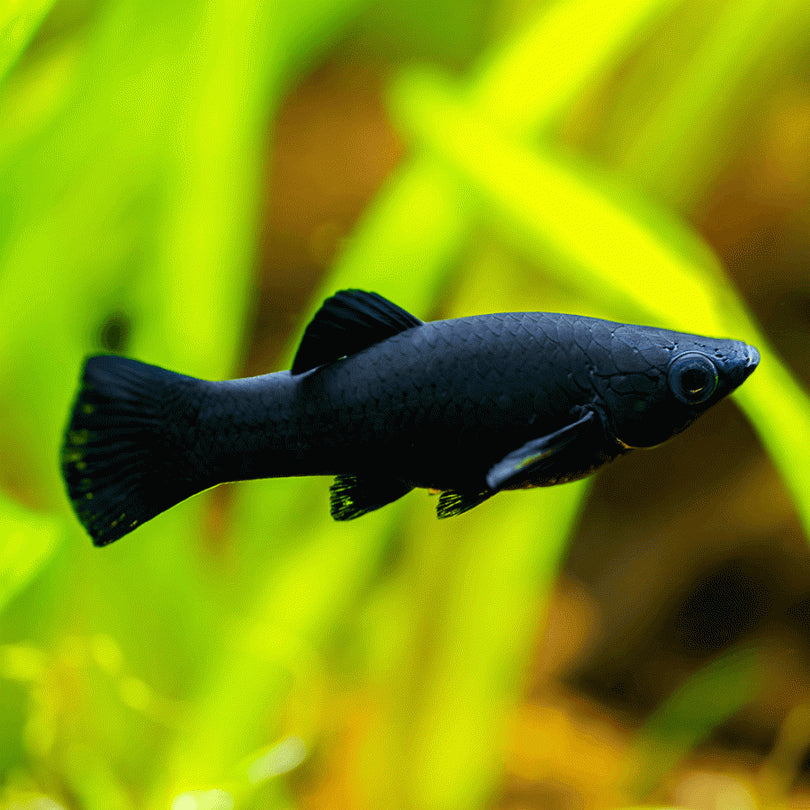
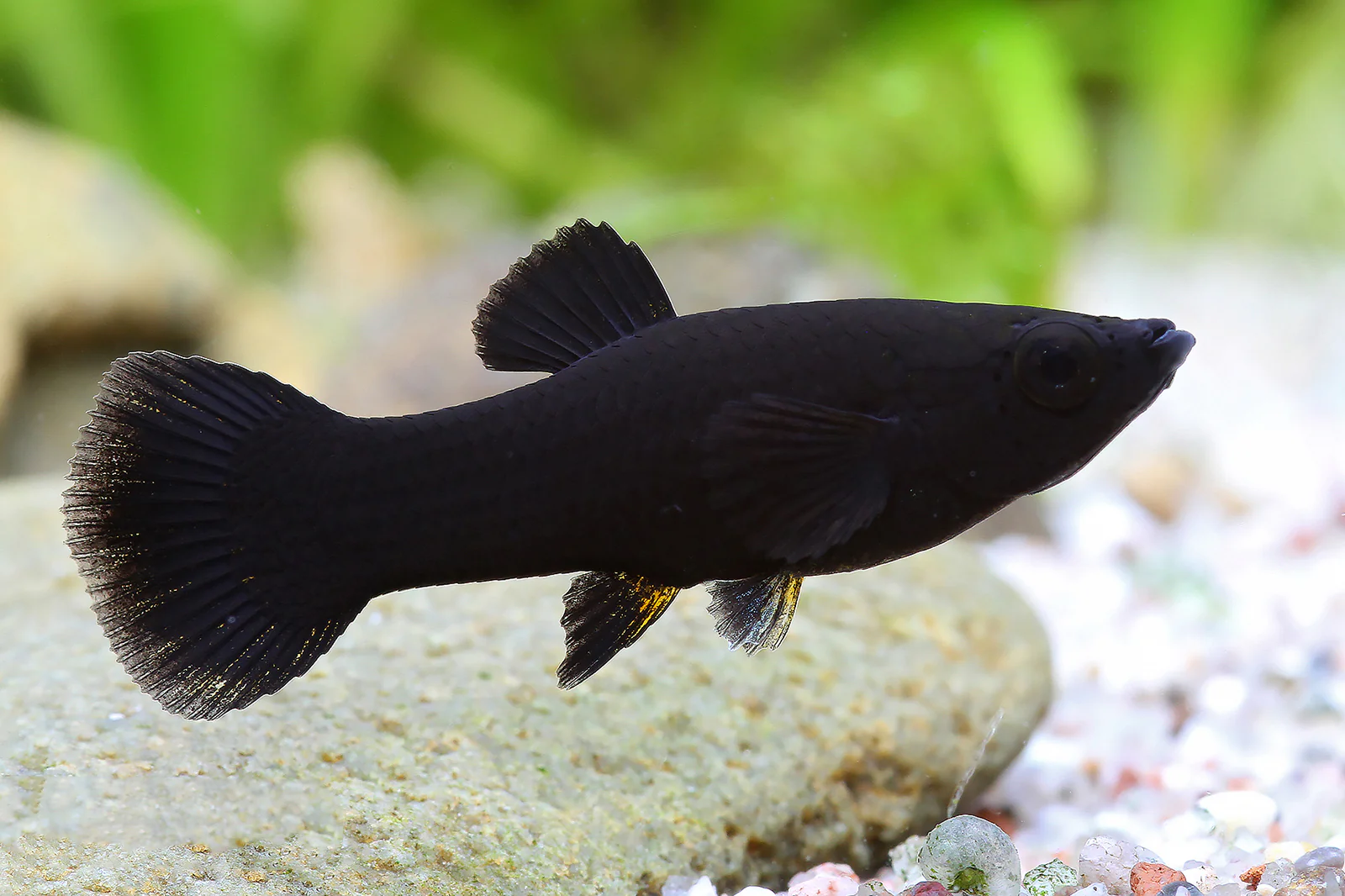
Pictures of fish and fish in store may vary, these are just examples/fully grown fish
Black Molly
Scientific Name: Poecilia sphenops
Common Names: Black Molly, Common Molly
Origin: Central and South America (slow-moving streams, coastal marshes, and lagoons)
Adult Size: 3–4 inches (7.5–10 cm)
Lifespan: 3–5 years
Temperament: Peaceful, active, social
Difficulty Level: Easy
Sales Description
The Black Molly is a striking and elegant livebearer known for its sleek, jet-black coloration and graceful swimming behavior. Its solid color and peaceful nature make it an excellent addition to planted community aquariums, providing a beautiful contrast against green aquascapes. Black Mollies are hardy, adaptable, and easy to care for, making them one of the most popular and reliable fish choices for aquarists of all levels.
Highly active and social, Black Mollies prefer being kept in small groups. They coexist well with other peaceful fish such as tetras, guppies, platies, corydoras, and danios. Their friendly demeanor and constant motion make them ideal centerpiece fish for community tanks.
Care Guide
Black Mollies thrive in well-maintained freshwater aquariums with moderate flow, clean water, and open swimming space. A minimum tank size of 20 gallons is recommended. Provide a mix of open areas for swimming and planted sections for cover and security. They also appreciate a bit of driftwood or rockwork to explore.
Maintain water temperatures between 74–82°F (23–28°C) with a pH of 7.0–8.2 and moderate hardness. While they are fully freshwater fish, Black Mollies naturally come from slightly brackish environments and benefit from a small amount of aquarium salt (around one tablespoon per 5 gallons) if compatible with tankmates. Ensure stable water parameters, as mollies are sensitive to poor water quality or sudden changes.
Feed a varied diet that includes high-quality flakes or pellets, supplemented with algae wafers, blanched vegetables like spinach or zucchini, and occasional frozen or live foods such as brine shrimp, daphnia, or bloodworms. Mollies are omnivorous with a preference for plant matter, so regular access to vegetable-based foods helps maintain their health and vibrant color.
Breeding Notes
Black Mollies are livebearers, meaning females give birth to fully formed, free-swimming fry. Breeding is easy and often occurs naturally in well-maintained aquariums. Provide hiding spaces with dense plants like Java moss or floating vegetation to protect fry from being eaten. Females can give birth to 20–60 fry every few weeks. Feed fry finely crushed flakes, baby brine shrimp, or specialized fry food for optimal growth.
Product Information
Product Information
Shipping & Returns
Shipping & Returns
Molly - Black
Molly - Black
'
Pictures of fish and fish in store may vary, these are just examples/fully grown fish
Black Molly
Scientific Name: Poecilia sphenops
Common Names: Black Molly, Common Molly
Origin: Central and South America (slow-moving streams, coastal marshes, and lagoons)
Adult Size: 3–4 inches (7.5–10 cm)
Lifespan: 3–5 years
Temperament: Peaceful, active, social
Difficulty Level: Easy
Sales Description
The Black Molly is a striking and elegant livebearer known for its sleek, jet-black coloration and graceful swimming behavior. Its solid color and peaceful nature make it an excellent addition to planted community aquariums, providing a beautiful contrast against green aquascapes. Black Mollies are hardy, adaptable, and easy to care for, making them one of the most popular and reliable fish choices for aquarists of all levels.
Highly active and social, Black Mollies prefer being kept in small groups. They coexist well with other peaceful fish such as tetras, guppies, platies, corydoras, and danios. Their friendly demeanor and constant motion make them ideal centerpiece fish for community tanks.
Care Guide
Black Mollies thrive in well-maintained freshwater aquariums with moderate flow, clean water, and open swimming space. A minimum tank size of 20 gallons is recommended. Provide a mix of open areas for swimming and planted sections for cover and security. They also appreciate a bit of driftwood or rockwork to explore.
Maintain water temperatures between 74–82°F (23–28°C) with a pH of 7.0–8.2 and moderate hardness. While they are fully freshwater fish, Black Mollies naturally come from slightly brackish environments and benefit from a small amount of aquarium salt (around one tablespoon per 5 gallons) if compatible with tankmates. Ensure stable water parameters, as mollies are sensitive to poor water quality or sudden changes.
Feed a varied diet that includes high-quality flakes or pellets, supplemented with algae wafers, blanched vegetables like spinach or zucchini, and occasional frozen or live foods such as brine shrimp, daphnia, or bloodworms. Mollies are omnivorous with a preference for plant matter, so regular access to vegetable-based foods helps maintain their health and vibrant color.
Breeding Notes
Black Mollies are livebearers, meaning females give birth to fully formed, free-swimming fry. Breeding is easy and often occurs naturally in well-maintained aquariums. Provide hiding spaces with dense plants like Java moss or floating vegetation to protect fry from being eaten. Females can give birth to 20–60 fry every few weeks. Feed fry finely crushed flakes, baby brine shrimp, or specialized fry food for optimal growth.
Original: $5.84
-65%$5.84
$2.04Product Information
Product Information
Shipping & Returns
Shipping & Returns
Description
'
Pictures of fish and fish in store may vary, these are just examples/fully grown fish
Black Molly
Scientific Name: Poecilia sphenops
Common Names: Black Molly, Common Molly
Origin: Central and South America (slow-moving streams, coastal marshes, and lagoons)
Adult Size: 3–4 inches (7.5–10 cm)
Lifespan: 3–5 years
Temperament: Peaceful, active, social
Difficulty Level: Easy
Sales Description
The Black Molly is a striking and elegant livebearer known for its sleek, jet-black coloration and graceful swimming behavior. Its solid color and peaceful nature make it an excellent addition to planted community aquariums, providing a beautiful contrast against green aquascapes. Black Mollies are hardy, adaptable, and easy to care for, making them one of the most popular and reliable fish choices for aquarists of all levels.
Highly active and social, Black Mollies prefer being kept in small groups. They coexist well with other peaceful fish such as tetras, guppies, platies, corydoras, and danios. Their friendly demeanor and constant motion make them ideal centerpiece fish for community tanks.
Care Guide
Black Mollies thrive in well-maintained freshwater aquariums with moderate flow, clean water, and open swimming space. A minimum tank size of 20 gallons is recommended. Provide a mix of open areas for swimming and planted sections for cover and security. They also appreciate a bit of driftwood or rockwork to explore.
Maintain water temperatures between 74–82°F (23–28°C) with a pH of 7.0–8.2 and moderate hardness. While they are fully freshwater fish, Black Mollies naturally come from slightly brackish environments and benefit from a small amount of aquarium salt (around one tablespoon per 5 gallons) if compatible with tankmates. Ensure stable water parameters, as mollies are sensitive to poor water quality or sudden changes.
Feed a varied diet that includes high-quality flakes or pellets, supplemented with algae wafers, blanched vegetables like spinach or zucchini, and occasional frozen or live foods such as brine shrimp, daphnia, or bloodworms. Mollies are omnivorous with a preference for plant matter, so regular access to vegetable-based foods helps maintain their health and vibrant color.
Breeding Notes
Black Mollies are livebearers, meaning females give birth to fully formed, free-swimming fry. Breeding is easy and often occurs naturally in well-maintained aquariums. Provide hiding spaces with dense plants like Java moss or floating vegetation to protect fry from being eaten. Females can give birth to 20–60 fry every few weeks. Feed fry finely crushed flakes, baby brine shrimp, or specialized fry food for optimal growth.