Purple Harlequin Rasbora
Purple Harlequin Rasbora
Scientific Name: Trigonostigma heteromorpha (selective variant)
Common Names: Purple Harlequin, Lavender Harlequin, Harlequin Rasbora (Purple Morph)
Origin: Southeast Asia – originally Malaysia, Thailand, Singapore; selectively bred in captivity
Adult Size: 1.5–2 inches (3.8–5 cm)
Lifespan: 4–6 years
Temperament: Peaceful, schooling
Swimming Zone: Mid to upper water column
Sales Description
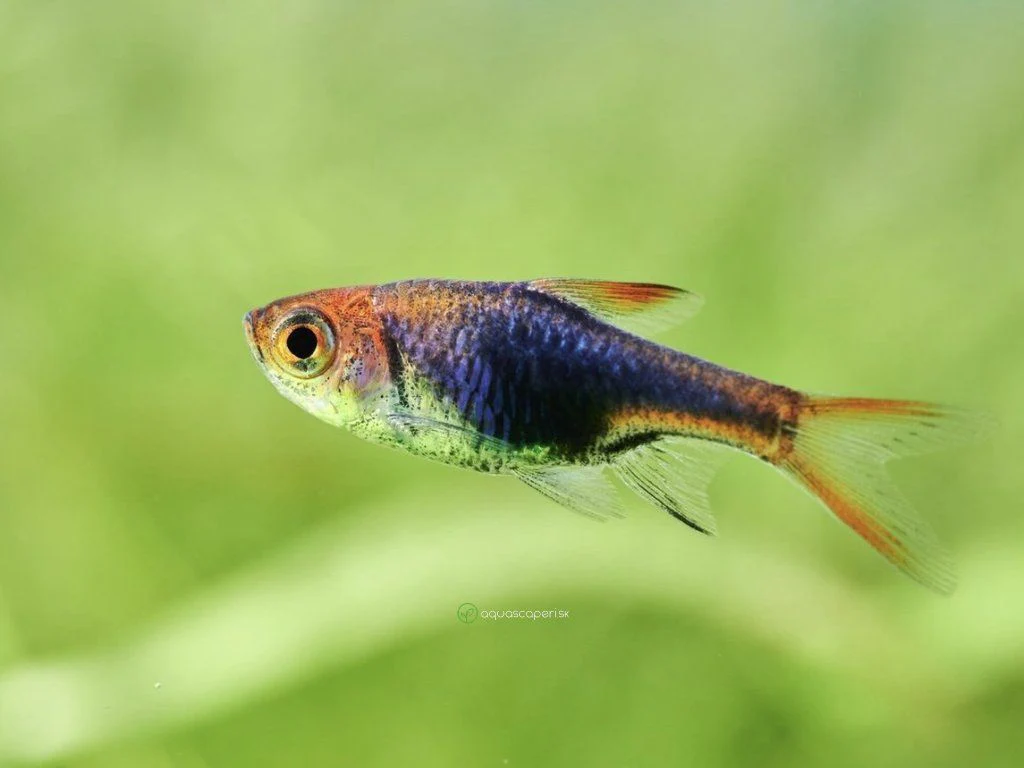
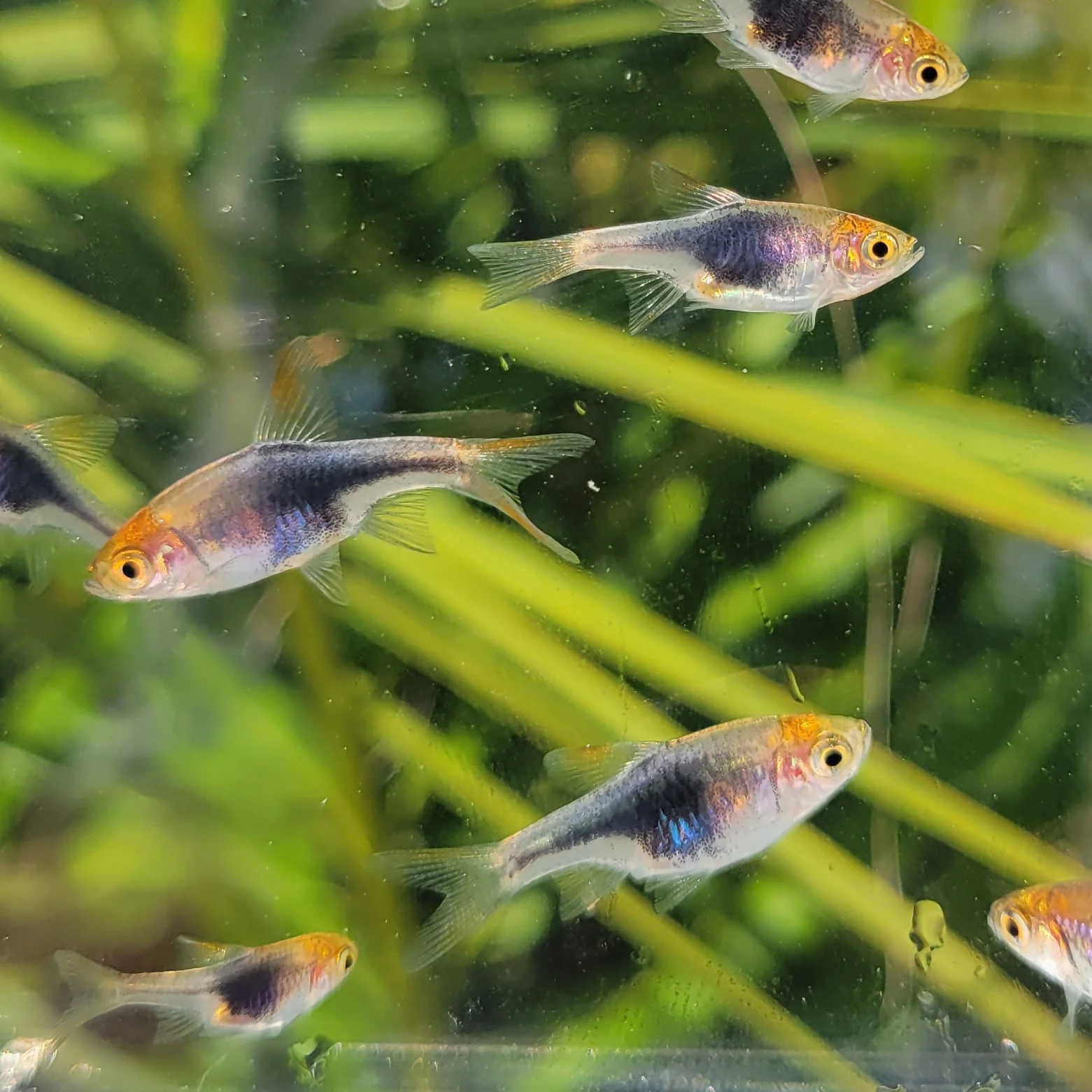
The Purple Harlequin Rasbora is a beautiful, selectively bred variant of the classic Harlequin Rasbora, prized for its soft violet sheen and distinctive black triangular patch that contrasts elegantly with its shimmering lavender body. This schooling fish is peaceful, adaptable, and adds gentle movement and subtle color to planted or community aquariums.
Ideal for nano tanks or larger peaceful setups, Purple Harlequins are hardy and undemanding, making them perfect for beginners while still being attractive enough to catch the eye of experienced aquarists. Their calm temperament and reliable schooling behavior also make them ideal dither fish for shy species such as dwarf cichlids or gouramis.
Care Guide
Purple Harlequin Rasboras are easy to care for and thrive in well-maintained community tanks with gentle flow, live plants, and a darker substrate that enhances their coloration. A tank size of at least 10 to 15 gallons is suitable for a school, though larger schools benefit from more open space to exhibit natural movement. They prefer water temperatures between 72–80°F (22–27°C) and a pH range of 6.0 to 7.5. While they tolerate a wide range of parameters, soft, slightly acidic water encourages deeper coloration and breeding behavior.
These rasboras are active midwater swimmers and should always be kept in groups of at least six to reduce stress and display proper schooling behavior. The more you keep, the more confident and visually striking they become.
Feeding is simple—Purple Harlequins are omnivores and readily accept a variety of foods. Offer high-quality micro pellets, crushed flakes, and occasional treats like frozen daphnia, brine shrimp, or bloodworms. A mixed diet will enhance their health, coloration, and activity.
Tankmates should be small, peaceful species. Good companions include small tetras, other rasboras, Corydoras, peaceful gouramis, pencilfish, otocinclus, and shrimp. Avoid aggressive or fin-nipping species, as their flowing fins and gentle nature make them poor competitors in hostile environments.
Breeding Notes
Breeding Purple Harlequin Rasboras is possible in a dedicated softwater setup. They are egg scatterers and require fine-leaved plants or spawning mops for successful spawning. A pair or small group will deposit adhesive eggs on the underside of broad leaves or similar surfaces. Adults should be removed after spawning to prevent egg predation. Eggs typically hatch within 24–36 hours, and fry become free-swimming in about 3–5 days. Begin feeding with infusoria or liquid fry food until they are large enough to accept micro foods and baby brine shrimp.
Product Information
Product Information
Shipping & Returns
Shipping & Returns
Purple Harlequin Rasbora
Purple Harlequin Rasbora
Purple Harlequin Rasbora
Scientific Name: Trigonostigma heteromorpha (selective variant)
Common Names: Purple Harlequin, Lavender Harlequin, Harlequin Rasbora (Purple Morph)
Origin: Southeast Asia – originally Malaysia, Thailand, Singapore; selectively bred in captivity
Adult Size: 1.5–2 inches (3.8–5 cm)
Lifespan: 4–6 years
Temperament: Peaceful, schooling
Swimming Zone: Mid to upper water column
Sales Description
The Purple Harlequin Rasbora is a beautiful, selectively bred variant of the classic Harlequin Rasbora, prized for its soft violet sheen and distinctive black triangular patch that contrasts elegantly with its shimmering lavender body. This schooling fish is peaceful, adaptable, and adds gentle movement and subtle color to planted or community aquariums.
Ideal for nano tanks or larger peaceful setups, Purple Harlequins are hardy and undemanding, making them perfect for beginners while still being attractive enough to catch the eye of experienced aquarists. Their calm temperament and reliable schooling behavior also make them ideal dither fish for shy species such as dwarf cichlids or gouramis.
Care Guide
Purple Harlequin Rasboras are easy to care for and thrive in well-maintained community tanks with gentle flow, live plants, and a darker substrate that enhances their coloration. A tank size of at least 10 to 15 gallons is suitable for a school, though larger schools benefit from more open space to exhibit natural movement. They prefer water temperatures between 72–80°F (22–27°C) and a pH range of 6.0 to 7.5. While they tolerate a wide range of parameters, soft, slightly acidic water encourages deeper coloration and breeding behavior.
These rasboras are active midwater swimmers and should always be kept in groups of at least six to reduce stress and display proper schooling behavior. The more you keep, the more confident and visually striking they become.
Feeding is simple—Purple Harlequins are omnivores and readily accept a variety of foods. Offer high-quality micro pellets, crushed flakes, and occasional treats like frozen daphnia, brine shrimp, or bloodworms. A mixed diet will enhance their health, coloration, and activity.
Tankmates should be small, peaceful species. Good companions include small tetras, other rasboras, Corydoras, peaceful gouramis, pencilfish, otocinclus, and shrimp. Avoid aggressive or fin-nipping species, as their flowing fins and gentle nature make them poor competitors in hostile environments.
Breeding Notes
Breeding Purple Harlequin Rasboras is possible in a dedicated softwater setup. They are egg scatterers and require fine-leaved plants or spawning mops for successful spawning. A pair or small group will deposit adhesive eggs on the underside of broad leaves or similar surfaces. Adults should be removed after spawning to prevent egg predation. Eggs typically hatch within 24–36 hours, and fry become free-swimming in about 3–5 days. Begin feeding with infusoria or liquid fry food until they are large enough to accept micro foods and baby brine shrimp.
Product Information
Product Information
Shipping & Returns
Shipping & Returns
Description
Purple Harlequin Rasbora
Scientific Name: Trigonostigma heteromorpha (selective variant)
Common Names: Purple Harlequin, Lavender Harlequin, Harlequin Rasbora (Purple Morph)
Origin: Southeast Asia – originally Malaysia, Thailand, Singapore; selectively bred in captivity
Adult Size: 1.5–2 inches (3.8–5 cm)
Lifespan: 4–6 years
Temperament: Peaceful, schooling
Swimming Zone: Mid to upper water column
Sales Description
The Purple Harlequin Rasbora is a beautiful, selectively bred variant of the classic Harlequin Rasbora, prized for its soft violet sheen and distinctive black triangular patch that contrasts elegantly with its shimmering lavender body. This schooling fish is peaceful, adaptable, and adds gentle movement and subtle color to planted or community aquariums.
Ideal for nano tanks or larger peaceful setups, Purple Harlequins are hardy and undemanding, making them perfect for beginners while still being attractive enough to catch the eye of experienced aquarists. Their calm temperament and reliable schooling behavior also make them ideal dither fish for shy species such as dwarf cichlids or gouramis.
Care Guide
Purple Harlequin Rasboras are easy to care for and thrive in well-maintained community tanks with gentle flow, live plants, and a darker substrate that enhances their coloration. A tank size of at least 10 to 15 gallons is suitable for a school, though larger schools benefit from more open space to exhibit natural movement. They prefer water temperatures between 72–80°F (22–27°C) and a pH range of 6.0 to 7.5. While they tolerate a wide range of parameters, soft, slightly acidic water encourages deeper coloration and breeding behavior.
These rasboras are active midwater swimmers and should always be kept in groups of at least six to reduce stress and display proper schooling behavior. The more you keep, the more confident and visually striking they become.
Feeding is simple—Purple Harlequins are omnivores and readily accept a variety of foods. Offer high-quality micro pellets, crushed flakes, and occasional treats like frozen daphnia, brine shrimp, or bloodworms. A mixed diet will enhance their health, coloration, and activity.
Tankmates should be small, peaceful species. Good companions include small tetras, other rasboras, Corydoras, peaceful gouramis, pencilfish, otocinclus, and shrimp. Avoid aggressive or fin-nipping species, as their flowing fins and gentle nature make them poor competitors in hostile environments.
Breeding Notes
Breeding Purple Harlequin Rasboras is possible in a dedicated softwater setup. They are egg scatterers and require fine-leaved plants or spawning mops for successful spawning. A pair or small group will deposit adhesive eggs on the underside of broad leaves or similar surfaces. Adults should be removed after spawning to prevent egg predation. Eggs typically hatch within 24–36 hours, and fry become free-swimming in about 3–5 days. Begin feeding with infusoria or liquid fry food until they are large enough to accept micro foods and baby brine shrimp.