White glove Vampire Crab
Pictures of fish and fish in store may vary, these are just examples/fully grown fish
White Glove Vampire Crab
Scientific Name: Geosesarma cf. dennerle
Common Names: White Glove Vampire Crab, Dennerle Vampire Crab
Origin: Southeast Asia (commonly Indonesia)
Adult Size: 1.5–2 inches (including legs)
Lifespan: 2–3 years
Temperament: Peaceful to semi-territorial
Habitat Type: Semi-terrestrial (paludarium species)
Sales Description
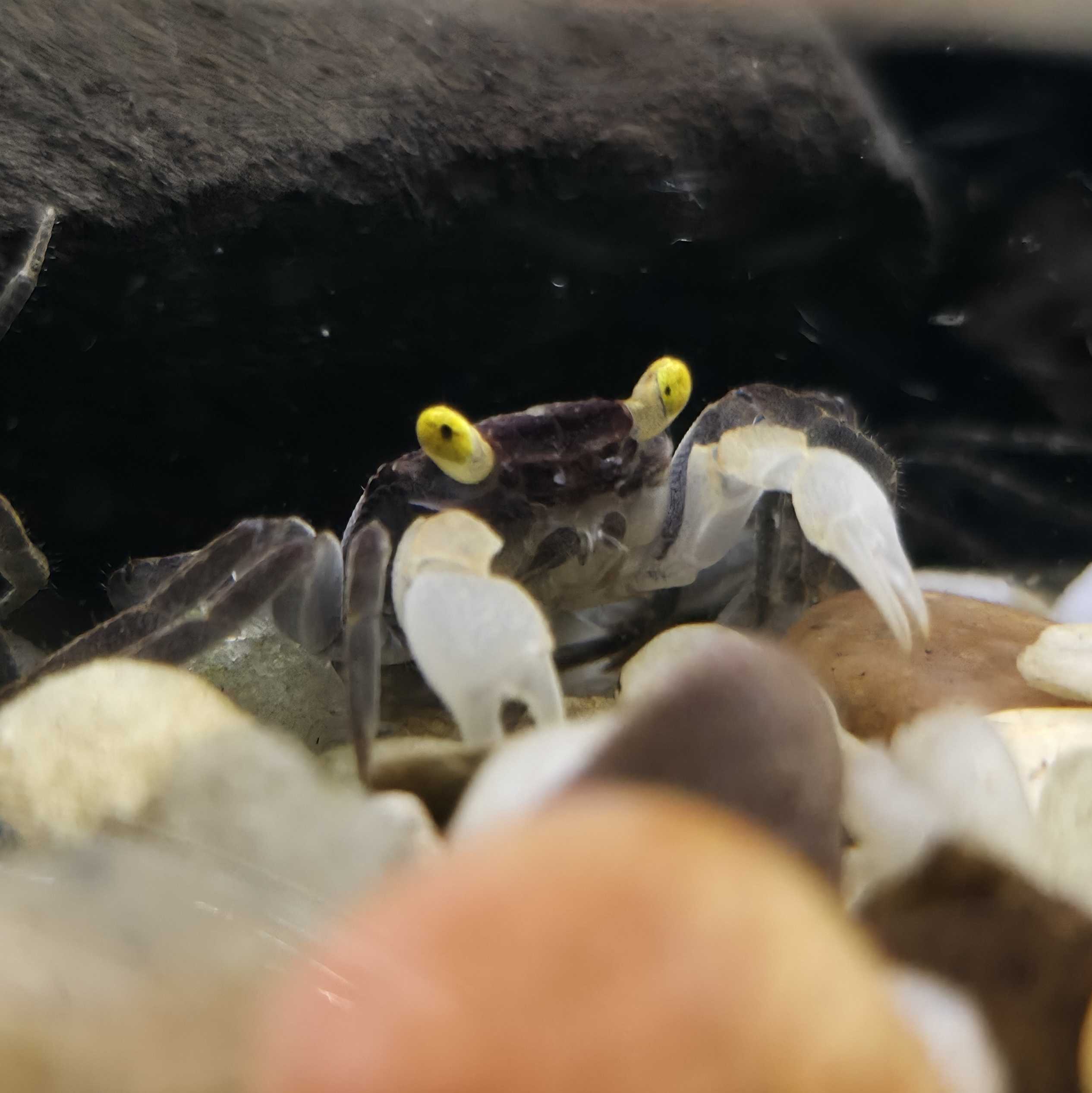
The White Glove Vampire Crab (Geosesarma cf. dennerle) is one of the most striking and desirable freshwater crabs in the hobby. Its dark purple to black carapace contrasts beautifully with its vivid white claws, giving it the distinctive “white glove” appearance that aquarists love. Unlike many crab species, this one is fully freshwater and does not require brackish conditions to thrive.
These small, vibrant crabs are perfect for planted paludariums or bioactive terrariums where both land and water elements are present. Their unique coloration, bold personalities, and ease of care make them a favorite for nano setups and naturalistic vivarium displays. When kept in small groups, they exhibit fascinating social and territorial behaviors that add life and intrigue to any aquascape.
Care Guide
White Glove Vampire Crabs thrive in environments that replicate their natural forest-edge habitat. A paludarium setup with 60–70% land area and 30–40% shallow freshwater is ideal. The land area should be built using moist substrate such as coconut fiber or sphagnum moss, with driftwood, rocks, and live or artificial plants to provide shelter and climbing surfaces. The water portion should be dechlorinated, gently filtered, and kept shallow enough for easy access in and out of the water.
Optimal water parameters are a temperature range of 75–82°F (24–28°C), pH between 7.0 and 7.8, and moderate hardness. Humidity levels should be maintained at 80% or higher with regular misting. Use a tight-fitting lid, as these crabs are excellent climbers and known escape artists.
Diet should consist of a mix of protein and plant matter. Offer sinking pellets, algae wafers, and a variety of frozen or live foods such as bloodworms, brine shrimp, or chopped earthworms. They also enjoy blanched vegetables like spinach or zucchini and will scavenge on biofilm or decaying plant material. Feed small portions daily or every other day, ensuring no excess food spoils in the enclosure.
White Glove Vampire Crabs are generally peaceful but can become territorial if overcrowded. A 10-gallon tank can comfortably house one male and two to three females, or a small group with plenty of hides and visual barriers. Avoid mixing males unless the habitat is large and well-structured. They can coexist with small freshwater snails or micro fish that stay in the water area, but tankmates should be chosen carefully to prevent stress or predation.
Breeding Notes
Unlike many crab species, Geosesarma cf. dennerle breeds in freshwater. Females carry fully developed eggs under their abdomen until miniature crabs hatch directly, skipping the larval stage. Successful breeding requires stable humidity, warm temperatures, and a stress-free environment. Provide dense hiding areas and minimize disturbance to increase reproductive success.
Product Information
Product Information
Shipping & Returns
Shipping & Returns
White glove Vampire Crab
White glove Vampire Crab
Pictures of fish and fish in store may vary, these are just examples/fully grown fish
White Glove Vampire Crab
Scientific Name: Geosesarma cf. dennerle
Common Names: White Glove Vampire Crab, Dennerle Vampire Crab
Origin: Southeast Asia (commonly Indonesia)
Adult Size: 1.5–2 inches (including legs)
Lifespan: 2–3 years
Temperament: Peaceful to semi-territorial
Habitat Type: Semi-terrestrial (paludarium species)
Sales Description
The White Glove Vampire Crab (Geosesarma cf. dennerle) is one of the most striking and desirable freshwater crabs in the hobby. Its dark purple to black carapace contrasts beautifully with its vivid white claws, giving it the distinctive “white glove” appearance that aquarists love. Unlike many crab species, this one is fully freshwater and does not require brackish conditions to thrive.
These small, vibrant crabs are perfect for planted paludariums or bioactive terrariums where both land and water elements are present. Their unique coloration, bold personalities, and ease of care make them a favorite for nano setups and naturalistic vivarium displays. When kept in small groups, they exhibit fascinating social and territorial behaviors that add life and intrigue to any aquascape.
Care Guide
White Glove Vampire Crabs thrive in environments that replicate their natural forest-edge habitat. A paludarium setup with 60–70% land area and 30–40% shallow freshwater is ideal. The land area should be built using moist substrate such as coconut fiber or sphagnum moss, with driftwood, rocks, and live or artificial plants to provide shelter and climbing surfaces. The water portion should be dechlorinated, gently filtered, and kept shallow enough for easy access in and out of the water.
Optimal water parameters are a temperature range of 75–82°F (24–28°C), pH between 7.0 and 7.8, and moderate hardness. Humidity levels should be maintained at 80% or higher with regular misting. Use a tight-fitting lid, as these crabs are excellent climbers and known escape artists.
Diet should consist of a mix of protein and plant matter. Offer sinking pellets, algae wafers, and a variety of frozen or live foods such as bloodworms, brine shrimp, or chopped earthworms. They also enjoy blanched vegetables like spinach or zucchini and will scavenge on biofilm or decaying plant material. Feed small portions daily or every other day, ensuring no excess food spoils in the enclosure.
White Glove Vampire Crabs are generally peaceful but can become territorial if overcrowded. A 10-gallon tank can comfortably house one male and two to three females, or a small group with plenty of hides and visual barriers. Avoid mixing males unless the habitat is large and well-structured. They can coexist with small freshwater snails or micro fish that stay in the water area, but tankmates should be chosen carefully to prevent stress or predation.
Breeding Notes
Unlike many crab species, Geosesarma cf. dennerle breeds in freshwater. Females carry fully developed eggs under their abdomen until miniature crabs hatch directly, skipping the larval stage. Successful breeding requires stable humidity, warm temperatures, and a stress-free environment. Provide dense hiding areas and minimize disturbance to increase reproductive success.
Original: $18.27
-65%$18.27
$6.39Product Information
Product Information
Shipping & Returns
Shipping & Returns
Description
Pictures of fish and fish in store may vary, these are just examples/fully grown fish
White Glove Vampire Crab
Scientific Name: Geosesarma cf. dennerle
Common Names: White Glove Vampire Crab, Dennerle Vampire Crab
Origin: Southeast Asia (commonly Indonesia)
Adult Size: 1.5–2 inches (including legs)
Lifespan: 2–3 years
Temperament: Peaceful to semi-territorial
Habitat Type: Semi-terrestrial (paludarium species)
Sales Description
The White Glove Vampire Crab (Geosesarma cf. dennerle) is one of the most striking and desirable freshwater crabs in the hobby. Its dark purple to black carapace contrasts beautifully with its vivid white claws, giving it the distinctive “white glove” appearance that aquarists love. Unlike many crab species, this one is fully freshwater and does not require brackish conditions to thrive.
These small, vibrant crabs are perfect for planted paludariums or bioactive terrariums where both land and water elements are present. Their unique coloration, bold personalities, and ease of care make them a favorite for nano setups and naturalistic vivarium displays. When kept in small groups, they exhibit fascinating social and territorial behaviors that add life and intrigue to any aquascape.
Care Guide
White Glove Vampire Crabs thrive in environments that replicate their natural forest-edge habitat. A paludarium setup with 60–70% land area and 30–40% shallow freshwater is ideal. The land area should be built using moist substrate such as coconut fiber or sphagnum moss, with driftwood, rocks, and live or artificial plants to provide shelter and climbing surfaces. The water portion should be dechlorinated, gently filtered, and kept shallow enough for easy access in and out of the water.
Optimal water parameters are a temperature range of 75–82°F (24–28°C), pH between 7.0 and 7.8, and moderate hardness. Humidity levels should be maintained at 80% or higher with regular misting. Use a tight-fitting lid, as these crabs are excellent climbers and known escape artists.
Diet should consist of a mix of protein and plant matter. Offer sinking pellets, algae wafers, and a variety of frozen or live foods such as bloodworms, brine shrimp, or chopped earthworms. They also enjoy blanched vegetables like spinach or zucchini and will scavenge on biofilm or decaying plant material. Feed small portions daily or every other day, ensuring no excess food spoils in the enclosure.
White Glove Vampire Crabs are generally peaceful but can become territorial if overcrowded. A 10-gallon tank can comfortably house one male and two to three females, or a small group with plenty of hides and visual barriers. Avoid mixing males unless the habitat is large and well-structured. They can coexist with small freshwater snails or micro fish that stay in the water area, but tankmates should be chosen carefully to prevent stress or predation.
Breeding Notes
Unlike many crab species, Geosesarma cf. dennerle breeds in freshwater. Females carry fully developed eggs under their abdomen until miniature crabs hatch directly, skipping the larval stage. Successful breeding requires stable humidity, warm temperatures, and a stress-free environment. Provide dense hiding areas and minimize disturbance to increase reproductive success.